2018 Convenors’ Award for Excellence nominations

Each year we make the eligible nominations received for the annual Convenors’ Award for Excellence public. There are several reasons for this:

  • There is no shortlist announced, so it feels right to recognise the entries;
  • These are items you may not otherwise have come across, so we’d like to make sure you know about them;
  • It may help people figure out what might be eligible in future.

It is very important to note that this list is NOT a shortlist – it is simply a list of the eligible entries we received for the Award this year (please note also that these can be self-nominated). The convenors consider all eligible entries in deciding the winner, but there is no shortlist generated, and only the winner will be presented at the ceremony.

A reminder what this award is for:

The Convenors’ Award for Excellence is awarded at the discretion of the convenors for a particular achievement in speculative fiction or related areas in that year that cannot otherwise by judged for the Aurealis Awards. 

This award can be given to a work of non-fiction, artwork, film, television, electronic or multimedia work, or one that brings credit or attention to the speculative fiction genres.

This year’s entries are:

Eugen Bacon, “What is AfroSF?”, Aurealis #111

In her capacity as an African Australian writer, a creative writer and a scholar, Dr Eugen Bacon in this work of non-fiction continues her contribution to speculative fiction in insightful and accessible conversations that connect broad audiences. In this article Bacon interrogates the term ‘AfroSF’ in the context of science fiction by African writers, and its potential non-application to a wider logic as a ‘concept’ rather than a ‘naming’. The article is poignant and merits the attention of Australia’s AustLit society, a non-profit collaboration of academic, library and research organisations in discovering Australian creative writing, criticism, ‘blackworks’ and stage and screen productions. ‘What is AfroSF’ is creative non-fiction that credits the speculative fiction genre in expanding current debates by diverse storytellers in Australia’s literary, print and narrative landscape.

Jac Colvin, “Lost Ones”, Sub-Q Magazine

The dream’s half-remembered song pulls you towards the river at night. What will you find? “Lost Ones” is an eerie, atmospheric take on the rusalka, Slavic water nymphs whose intentions could be downright murderous. In “Lost Ones”, you’ll pit your wits and desperation against one. But something about this particular rusalka is familiar… “Lost Ones” is a short work of electronic interactive fiction which combines the old with the new. The rusalki, creatures from half remembered folk tales, are brought to life in a way that allows the audience to become part of the story. Readers take the part of the protagonist, influencing the story with their decisions and allowing it to conclude in multiple ways.

Ruqiyah Patel, “if not us: an interactive fiction anthology”

if not us is unique to interactive fiction: a collection of five different stories, each with different presentations, narrators, mechanics and styles. It draws on traditional literary techniques and classic fantasy tropes to tell an epic story with minimal exposition: five heroes embark on a journey to save the world, but the journey claims their lives one by one, and at the end the sole remaining hero stands outside their enemy’s fortress and wonders: can I be victorious alone? Is this the battle that I must fight? What success will I find, if I continue onwards? ‘Tragedy’ is a classic literary genre, but it’s rarely seen in video games – I argue this is because the archetypal tragedy relies on the protagonist’s own flaws leading to their downfall, and having to play through this yourself in a video game can be a gruelling, unpleasant experience. if not us brings tragedy to games in a more palatable way – yes, you play as a character whose flaws have cost them everything, but the question is: what next? Must this remain a tragedy? if not us runs on Mac/Windows/Linux and can be downloaded for free at https://ub4q.itch.io/ifnotus

Tansy Rayner Roberts, “Gentlewomen of the Press”, self-published

A themed collection of pop culture essays from an award-winning Australian critic.

Cat Sparks, “The 21st Century Catastrophe: Hyper-capitalism and Severe Climate Change in Science Fiction”, Curtin University

The exegesis, The 21st Century Catastrophe: Hyper-capitalism and Severe Climate Change in Science Fiction, examines key cultural concerns of the sixties and seventies as expressed through ecocatastrophe science fiction: overpopulation, pollution, resource depletion and contamination, considering that, despite sophisticated literary efforts, science fiction’s cautionary tales were rendered ineffective, diffused by genre cringe and prejudice, dismissed as mere entertainment. This is contrasted with contemporary climate fiction, written with the presumption that the processes leading to resource depleted, climate ravaged futures are already inexorably in motion. Anthropocene fiction is pushing beyond its origins as a subgenre of science fiction, evolving into a bold new genre responding directly to looming environmental crisis, laying the foundations for new literatures to emerge alongside new technologies, new attitudes, new social ecologies and new hope. This exegesis brings both credit and attention to the speculative fiction genre by detailing storytelling’s call for the expansion of literary boundaries into frontiers, the pulling down of fences, the retiring of the old and the invigoration of fresh, new perspectives as our societies and cultures are forced to embrace a reality in which all mimetic fiction will eventually be climate fiction by default.

Kim Wilkins, Lisa Fletcher, and Beth Driscoll, “Genre Worlds: Australian Popular Fiction in the 21st Century”

This large-scale research project sought to understand the interlinked textual, social, and industrial complexities of the production of Australian fantasy, crime, and romance. Over the three years of the project, the team interviewed over 100 writers and publishing personnel, organised an industry conference (http://www.genreworlds.com/genre-worlds-symposium-2016/), an academic conference (http://www.genreworlds.com/genre-worlds-conference-2017/), curated a special issue of Australian Literary Studies (https://www.australianliterarystudies.com.au/issues/genre-worlds-popular-fiction-in-the-twenty-first-century), and published findings about Australian genre fiction of the 21st century, including one on small press and fantasy fandoms, and another tracing the publishing ecosystems of fantasy, crime, and romance (attached). The project was funded with more the $300,000 of Australian Research Council money, and was the first large funded project in Australia that took as its object of study the “”genre worlds”” of fantasy, crime, and romance. As such, it has raised the profile of those genres and the profile of speculative fiction in the academic world, and has expanded the field through nurturing multiple PhD students and early career researchers.

 

Posted in News | Tagged | Leave a comment

Aurealis Awards entries close this Friday!

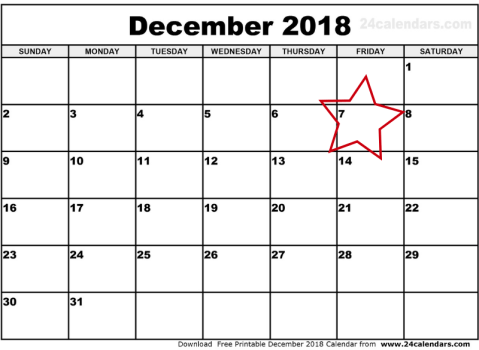
Only two days left to get your 2018 Aurealis Awards entries in. It’s important to remember that ALL eligible Australian work published for the first time between January 1 and December 31, 2018, must be entered by midnight on December 7, even work intended for publication after the December 7 cut off date.

Don’t be late – get your entries in now!

ICQ

Posted in News | Tagged , | Leave a comment

Aurealis Awards entries update and reminder!

There is now less than one month until entries close for the 2018 Aurealis Awards. It’s important to remember that ALL eligible Australian work published for the first time between January 1 and December 31, 2018, must be entered by December 7, even work intended for publication after the December 7 cut off date.

Please take care to check the updated entries received list and get your entries in!

untitled-design-e1541910515597.png

Posted in News | Tagged , | 2 Comments

Save the date! Aurealis Awards ceremony in Melbourne!

We’re very excited to announce that the Aurealis Awards ceremony will be held in Melbourne on the evening of Saturday 4 May, 2019. Further details of venue and exact time to be confirmed, but lock it into your calendar!

154070679446078092

Posted in News | Leave a comment

Only three days left to enter the SARA DOUGLASS BOOK SERIES AWARD

Entries for the Sara Douglass Book Series Award close on Friday 31 August, 2018. If you or someone you know had an Australian speculative fiction series of at least two books that was considered finished in 2015, 2016 or 2017, make sure it is entered! More information here.

Here is a list of current entries as at 9pm Tuesday 28 August.

time_is_running_out_dribbble

Posted in News | Tagged | Leave a comment

Reminder: Sara Douglass Book Series Award closes August 31

A reminder to ensure all eligible series for the Sara Douglass Book Series Award are entered by August 31, 2018.

Unlike the rest of the main Aurealis Awards categories (which close December 7), the Sara closes in August:

    1. because it only considers series that have already concluded in previous years, and,
    2. to allow the panel time to read the quantity of work entered.

There have already been nearly 30 series submitted, ranging from two books to seven books each, but there are many more we know are eligible!


Remember, there are NO restrictions on when the series BEGAN, for the Sara, only when it is considered concluded. A series is eligible for the Sara if it is considered CONCLUDED during the eligibility period – this year, that means series ending in 2015, 2016 or 2017. The phrase used – “considered concluded” – is important. The expectation is that publishers and authors have no CURRENT expectation of there being further books in the series. We know sometimes a new book comes out several years later, when inspiration strikes unexpectedly!

The same rules about reprints applies though, as per the other Aurealis Awards categories, that is, if the series was originally published in the 1990s but it was reprinted (eg: as an omnibus) in 2017, that does not mean it is eligible for the Award. The exception would be if a new work was added to the series within the eligibility period of 2015/16/17.

The panel has already begun their reading and the judges are very excited about the quality of the entries so far.

Don'tForget

Posted in News | Tagged , , | Leave a comment

Aurealis Awards entry update

We’ve just posted an update of entries for the 2018 Aurealis Awards. With fewer than 200 entries across the categories so far, we know we have a fair way to go, and our judges truly appreciate all eligible work being entered as early as possible! See the current list here.

Authors, please check with your publisher to ensure they are entering your work, or make arrangements to submit it yourself – we aim to be as inclusive as possible and absolutely hate to see things left out.

Entries for the Aurealis Awards close December 7, 2018 for all eligible Australian work first published in the 2018 calendar year.

Entries for the SARA DOUGLASS BOOK SERIES AWARD close August 31, 2018.

Posted in News | Tagged | Leave a comment

2018 Aurealis Awards are open for entry

MEDIA RELEASE – for immediate distribution

1 June 2018

2018 Aurealis Awards now open for entries

2018 Aurealis Awards overseers the Continuum Foundation (ConFound) announces that the 2018 Aurealis Awards are now open for entries.

The Aurealis Awards, Australia’s premier awards for speculative fiction, are for works created by an Australian citizen or permanent resident, and published for the first time between 1 January 2018 and 31 December 2018.

Full guidelines and FAQ can be found on the Aurealis Awards website:

https://aurealisawards.org/rules/

https://aurealisawards.org/faq/

We strongly encourage publishers and authors to enter all works published in the first half of the year by August 2018, then subsequent publications as they are released; our judges appreciate having time to consider each entry carefully.

The Aurealis Awards judges welcome electronic entries in all categories, including novels, short stories, novellas, illustrated work / graphic novels, collections, anthologies, children’s and young adult fiction. The Aurealis Awards management team recognises the financial burden of entering multiple works in multiple categories to some authors, editors and publishers at independent small presses. We accept epub and mobi files, although PDF may be provided if no other format is available (particularly for graphic works). Print may also be supplied.

The Sara Douglass Book Series Award, for series ending between 2015-2017, is also being run this year. Entries for this special award close on 31 August, 2018. More information is available at https://aurealisawards.org/the-sara-douglass-book-series-award/

Finalists of all award categories will be announced early in 2019 and winners announced at a ceremony to take place in Melbourne in the first half of the year. For more information on the awards or for the entry form, visit the Aurealis Awards website at https://aurealisawards.org/.

For more information contact the judging coordinator Tehani Croft at aajudges@gmail.com.

Posted in News | Tagged , | Leave a comment

Sara Douglass Book Series Awards open to entries

The judging panel now welcome entries for the 2018 Sara Douglass Book Series Award.

The 2018 Award covers all series ending between January 2015 and December 2017. Please see more information below and on the Sara page.

ABOUT THE AWARD

  • This year, the Sara covers series ending (in original publication) between January 2015 and December 2017. 
  • The current judging year is deliberately excluded. This permits an earlier submissions deadline to allow adequate time for the judges to consider all works entered.
  • Entries close August 31, 2018 (please note this is different to the rest of the Aurealis Awards).

GENERAL ELIGIBILITY

  • For the purpose of the Sara Douglass Book Series Award, a “series” is defined as a continuing ongoing story told through two or more books, which must be considered as ending in one of the years covered by the judging period.
  • This award is to recognise that there are book series that are greater as a whole than the sum of their parts – that is, the judges are looking for a series that tells a story across the series, not one that just uses the same characters/setting across loosely connected books. It is anticipated that shortlisted works will be best enjoyed read in succession, with an arc that begins in the first book and is completed in the last.
  • The series may be in any speculative genre within the extended bounds of science fiction, fantasy or horror (that is, if a book would be considered on an individual basis for one of the novel, or possibly novella, categories in the Aurealis Awards, the series may be considered here).
  • The Sara Douglass Book Series Award does not replace or depose individual books being entered in the usual categories – it is a supplementary Award.
  • As is also the case with the rules for Illustrated Work/Graphic Novel and serialised novels, if a series is considered finished and entered at the conclusion of (for example) book three, but then is continued in future works, the future works *may* be entered as a series at a later point, but the first trilogy (for example), if previously entered in the Series award, may not be considered again. As an example – if the first three books of Sara Douglass’s Wayfarer Redemption series (Battleaxe / Enchanter / Starman) had been entered in the Sara Douglass Book Series Award in the year following the publication of the final book, the subsequent trilogy continuing the story (Sinner / Pilgrim / Crusader) could have been entered in a later year, but the first three could not be considered again as a series of six. However, if the first three books had never been considered for the Sara Douglass Book Series Award, all six could have been entered at the conclusion. Essentially, parts of an extended series may only be considered once for this Award (although as noted, individual books are still eligible for regular Aurealis Awards categories in their year of publication).
  • There is no entry fee for this special Award category, but all books must be supplied to the judging panel by the entrant (publisher or author).

ENTER HERE

Posted in News | Leave a comment

Announcing the 2018 Aurealis Awards Judging Panels

Every year, we are fortunate that people from all over Australia volunteer their time and expertise to judge for the Aurealis Awards. They are amazing, they work extremely hard, and each year bring you the best of the best Australian spec fic has to offer. There were a record number of applications for judging positions this year, giving us the opportunity to share the load more widely and draw in a range of new experiences to our panels. Please welcome this year’s wonderful teams!

CHILDREN’S PANEL
Miffy Farquharson (panel convenor)
Kerry Armstrong
Liz Barr
Mim Crase
Sharon Smith

YA NOVEL PANEL
Caitlin Chisholm (panel convenor)
Alexa Shaw
Andrew Finegan
Elizabeth Fitzgerald
Michael Barrett

YA SHORT STORY PANEL
Linda Sengsourinho (panel convenor)
Anna Hepworth
Caitlin Wardle
Elspeth Lamorte
Heidi Kneale

FANTASY NOVEL PANEL
PRK (panel convenor)
Kimberly Chandler
Jake Kalago
Laura Birch
Nathan Phillips

SCIENCE FICTION NOVEL PANEL
Cathie Tasker (panel convenor)
Astrid Edwards
Dianne De Bellis
Lorraine Cormack
Simon Petrie

HORROR NOVEL / NOVELLA PANEL
Heather Iveson (panel convenor)
Christine Yunn-Yu Sun
Craig Hildebrand
Eugen Bacon
Hayley Baxter

FANTASY NOVELLA PANEL
Mark Fazackerley (panel convenor)
E E Montgomery
Jennifer Rowland
Rachel Nightingale
Stuart Dunstan

FANTASY SHORT STORY PANEL
Rob Porteous (panel convenor)
Earl Livings
Georgina Ballantine
Paige Belfield
Paula Boer

SCIENCE FICTION NOVELLA PANEL
Gene Melzack (panel convenor)
Chloe Townson
Chris Lampard
Natalie Haigh
Zohal Arbabzada

SCIENCE FICTION SHORT STORY PANEL
Zara Baxter (panel convenor)
Brie Hawthorne
Fergus McCartan
Joanna Kasper
Lindsey Hodder

HORROR SHORT STORY PANEL
Emma Kate (panel convenor)
Glenn George
Holly Harper
Michael Grey
Tom Woodward

ANTHOLOGIES / COLLECTIONS PANEL
Carol Ryles (panel convenor)
Deb Gates
Dorothy-Jane Daniels
Ion Newcombe
Jessica Harvie

ILLUSTRATED WORK / GRAPHIC NOVEL PANEL
Lynne Green (panel convenor)
Jess Howard
Justin Randall
Shel Sweeney
TR Napper

SARA DOUGLASS BOOK SERIES AWARD
Katharine Stubbs
Stephanie Gunn
Tehani Croft

We will be posting their bios on the Judges page of the website very soon, so you can get to know them a little better.

Posted in News | Tagged | Leave a comment